
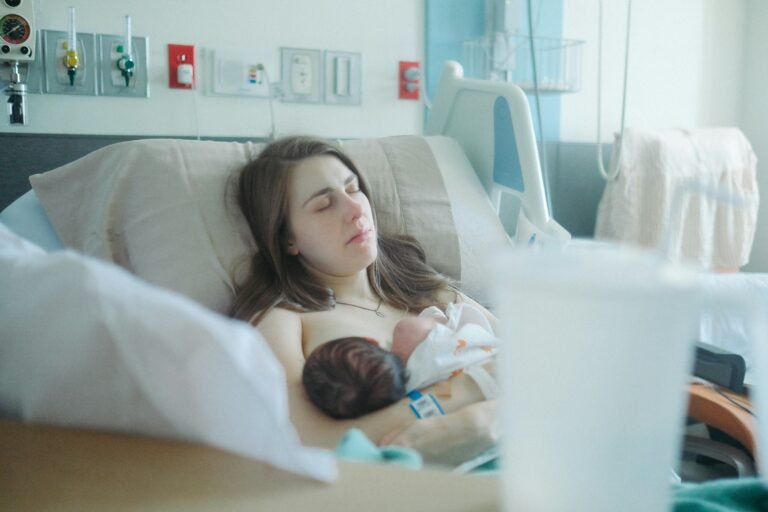
Listening to Mothers IV, the first national childbearing survey in over a decade, found that people with a birth doula used drug-free pain relief 68% more often, reached breastfeeding goals more often, and, alongside a midwife, had higher rates of physiologic birth. The new doula support evidence puts national numbers on the work you already do at the bedside.
Key Takeaways
- Listening to Mothers IV (Sakala et al., 2026) drew 3,857 responses from people who gave birth in U.S. hospitals in 2023 and 2024, the first national survey of its kind in over ten years.
- Drug-free pain relief was 68% higher for people who had a birth doula.
- Only 5% of births met the definition of physiologic birth, rising to 14% when a midwife and a doula were on the team together.
- Exclusive breastmilk feeding at one week was 72% with a doula in pregnancy, versus 59% without.
- 68% of people who had an episiotomy were given no choice about it, which marks exactly where informed-consent advocacy belongs.
- An earlier 2018 California survey by the same lead researchers found the same pattern: going without pain medication was more than twice as common with a doula present (31% vs 14%).
The doubt does not go away just because you have done more births. You can have a dozen behind you and still wonder whether what you bring to a room actually matters, or whether it is just nice to have. I have wondered it. Most doulas I know have too.
When a national survey finally puts numbers on what doulas do, I want you to have them. Not to argue with anyone. Just to walk into the next birth a little more sure of yourself.
What is the new national birth survey, and why does it matter now?
Listening to Mothers IV is the fourth national survey of people who gave birth in the United States, and the first one in more than a decade. It collected 3,857 valid responses from people who birthed a single baby in a U.S. hospital in 2023 or 2024, across all 50 states and Washington, D.C. It was offered in English and Spanish and published in June 2026 by the National Partnership for Women and Families.
The timing matters. The Pregnancy Risk Assessment Monitoring System, or PRAMS, the long-running federal survey that tracks how birth actually goes in this country, is paused and not collecting new data. For now, this survey is one of the clearest national pictures we have of what birthing people experienced and what helped.
And doulas are part of that national picture, with real numbers behind what their support adds.
What does the data actually say a doula does?
Three findings in this survey describe the work you do at the bedside, in plain figures.
People who had a birth doula used drug-free pain relief 68% more than people who did not. That is the position changes, the counterpressure, the breathing you coach, the steady voice at 3 a.m. The survey calls it comfort. You know it as most of your job.
Only 5% of all births in the survey met the consensus definition of physiologic birth, a birth that unfolds without major intervention. With a midwife and a doula on the team together, that figure rose to 14%. Put the two of them in a room and you get something neither one does alone.
Early feeding shifted too. Exclusive breastmilk feeding at one week was 72% for people who had a doula during pregnancy, compared to 59% for those who did not. The prenatal talks, the honest prep, the help in that first hour, it shows up a week later in how feeding is going.
A caution on framing. The survey describes what doula and midwifery support added when it was present. It is not a knock on physicians or nurses, who provide the clinical care. It is a measurement of what your kind of support contributes alongside them.
Is this the first study to show doula support works?
No. The lead researchers behind this report have been surveying birthing people in the United States since 2002, and the same doula pattern keeps showing up. A large survey of birthing people across California, published in 2018 by the same team, found it too. Among people who gave birth vaginally there, going without pain medication was more than twice as common with a doula present: 31 percent, compared to 14 percent without one.
So the new national numbers are not a surprise reading. They are the latest in a line of surveys, taken years apart and across different populations, all pointing the same direction. When the data lines up like that, you can lean on what it tells you.
Where in a birth does a doula make the clearest difference?
One finding stopped me. Among people who had an episiotomy, 68% were not given a choice about the cut.
Read that again. That gap is exactly where a doula goes to work. Not performing the procedure. Not deciding anything clinical. You are the one who, weeks before labor, helped a family understand what informed consent sounds like and had them practice asking for it out loud. You are the one who, in the moment, helps a birthing person find the words to ask one more question before anyone proceeds.
That is advocacy, and it is teachable, and the survey just told you exactly how often it is needed.
One respondent put the whole thing more plainly than any statistic could:
"Doulas are needed just as much as a doctor is."
That is a birthing person, in a national survey, saying it without being prompted.
If your confidence about your own worth tends to wobble, this is the kind of question that gets unpacked every week inside the Doula Mentoring Collective. For $47 a month you get a live room of working doulas to bring the hard moments to, instead of replaying them alone in your car afterward.
How do I talk about my value without overselling it?
Knowing the data is one thing. Using it without sounding like a brochure is another. Here is how I would put it.
With a client who is weighing whether a doula is worth it, you do not need to oversell. Something like: "National data from last year found that people with a birth doula used drug-free pain relief 68% more often, and were more likely to reach their breastfeeding goals. I am here to help your birth go the way you want it to, and the evidence backs that up."
With a provider or a nurse, lead with partnership, not proof. "I am the family's doula. My job is comfort and helping them feel informed, so we are on the same team here." You rarely need to cite a survey to a clinician. You need to be calm, useful, and clear about your role.
And with yourself, on the morning after a long birth when the doubt creeps back in, remember the numbers are on your side now. You were not imagining that you mattered in that room.
Sources
Sakala, C., Strauss, N., Barnard-Mayers, R., Hernández-Cancio, S., & Declercq, E. R. (2026). Listening to Mothers IV: New Mothers' Views and Experiences of Childbearing. First Questionnaire Report. Washington, D.C.: National Partnership for Women & Families. https://nationalpartnership.org/report/listening-to-mothers-iv/
Sakala, C., Declercq, E. R., Turon, J. M., & Corry, M. P. (2018). Listening to Mothers in California: A Population-Based Survey of Women's Childbearing Experiences, Full Survey Report. Washington, D.C.: National Partnership for Women & Families. https://nationalpartnership.org/health-justice/maternal-health/listening-to-mothers-ca/report/
Declercq, E. R., Sakala, C., Corry, M. P., Applebaum, S., & Herrlich, A. (2013). Listening to Mothers III: Pregnancy and Birth. New York: Childbirth Connection. https://nationalpartnership.org/health-justice/maternal-health/listening-to-mothers/
The full reports and related resources are available at the links above.
Keep Building Your Confidence
Confidence in this work does not come from one more certificate. It comes from having a place to bring the real questions, the births that rattled you, and the moments you were not sure you handled right, and hearing from doulas who have been there. That is what the Doula Mentoring Collective is for. Live support every week, a group that gets it, and a regular reminder that your work counts. You can join for $47 a month at DoulaBusiness.com.
Frequently Asked Questions
Does this survey prove that doulas cause these better outcomes?
No, and it is more honest to say so. Listening to Mothers IV is observational, which means it shows that doula support and these outcomes traveled together, not that one strictly caused the other. The pattern is consistent with decades of earlier research on continuous labor support, which is why it is fair to say the evidence backs up what doulas do.
How recent is this data?
The responses come from people who gave birth in 2023 and 2024, and the report was published in June 2026. That makes it the most current national picture of U.S. hospital birth available right now, especially with the federal PRAMS survey paused.
Does it apply to home births or birth center births?
This first report surveyed people who gave birth to a single baby in a U.S. hospital, so the numbers describe hospital birth specifically. The findings about comfort, consent, and early feeding still inform how you work in any setting, but cite them as hospital data when you share them.
How do I cite this if a client or provider asks for the source?
Point them to Listening to Mothers IV from the National Partnership for Women and Families at nationalpartnership.org/report/listening-to-mothers-iv. You can name it as the fourth national Listening to Mothers survey and the first in over a decade, which carries weight on its own.
What if I have never had a birth where I felt I made a measurable difference?
Comfort support and informed-consent prep often do their work quietly, so it rarely feels measurable in the moment. The point of national data like this is that it captures the difference across thousands of births even when any single birth does not announce it.
Can I use these statistics in my marketing?
Yes, as long as you frame them as what doula support adds rather than as a claim against any provider. Quote the figure, link the source, and keep your own promise modest, such as helping a family feel supported and informed.